


STAND & CLAMP


A stand and clamp is a basic yet essential piece of laboratory equipment used to hold and support apparatus during experiments. It provides stability and helps secure glassware or other tools in place.
Related Products


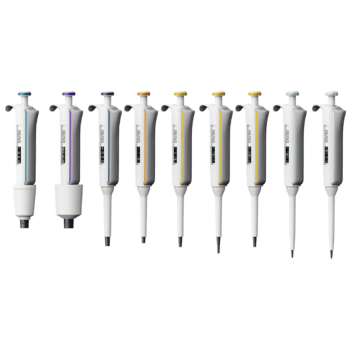
Mi-Pette New Generation Colorful Fully Autoclavable Adjustable Pipette is a high-precision manual pipette designed for accurate and comfortable liquid handling. Featuring an ergonomic design, color-coded identification, fine volume adjustment, and full autoclavability, it is ideal for research, diagnostics, and routine laboratory applications.

Petri dishes are shallow, circular, flat-lidded dishes typically made of glass or plastic, used in laboratories for culturing microorganisms like bacteria and fungi. Filled with a nutrient medium (e.g., agar), they provide a controlled environment for microbial growth. Petri dishes are essential tools in microbiology, cell culture, and research involving observation of microbial colonies and growth patterns.


Racks are laboratory tools used to hold, organize, and store test tubes safely and upright. They are made of plastic, wood, or metal and come in various sizes to fit different tube diameters. These racks help prevent spillage, breakage, and contamination during experiments, making them essential for safe and efficient laboratory work.

PCR tubes are small, thin-walled plastic tubes used in Polymerase Chain Reaction (PCR) to hold DNA samples during thermal cycling. Made of polypropylene, they ensure efficient heat transfer and chemical resistance. They typically come in 0.2 mL or 0.5 mL sizes, with flat or domed caps. PCR tubes are essential for precise and contamination-free DNA amplification.

HiPette-LTS Fully Autoclavable Manual 8-Channel Adjustable Colorful Pipette is a high-precision, fully autoclavable multi-channel pipette designed for accurate and efficient liquid handling. Featuring LTS technology for smooth tip loading and consistent performance, it is ideal for molecular biology, cell culture, immunology, and routine laboratory applications.

A laboratory bladder is a flexible, inflatable membrane or container used in various experimental setups to simulate pressure, store gases or liquids, or mimic biological systems. Made from materials like latex or silicone, it is commonly used in fluid mechanics, biomedical research, or testing equipment to apply controlled pressure or volume changes.
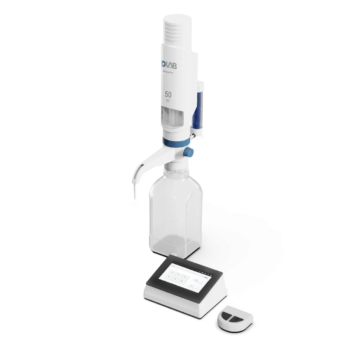
dFlow-Pro Electronic Bottle-Top Dispenser is a high-precision electronic dispenser designed for accurate, efficient, and safe liquid handling. With a smart touchscreen, multiple dispensing modes, and adjustable speed control, it is ideal for laboratory and industrial dispensing applications.

Porcelain mortar with pestle
Made of upper grade porcelain. Unglazed inside but fine polished. Price includes mortar and pestle.

Boiling flasks are used for heating and boiling of liquids. The flasks are designed to have round bodies with long, thin necks to facilitate uniform heat distribution and minimize evaporation. Boiling flasks are typically made of borosilicate glass, which is resistant to thermal shock and chemicals. Some boiling flasks have rounded or conical bottoms and need support to stand upright, while others have flat bottoms and can stand alone.


Reviews
There are no reviews yet.