
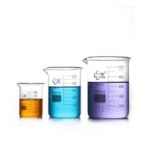


BEAKER

Beaker is a common laboratory container used for mixing, stirring, and heating chemicals. It is usually made of glass or plastic and has a cylindrical shape with a flat bottom and a small spout for easy pouring. Beakers come in various sizes and have volume markings, but they are not used for precise measurements.
Related Products
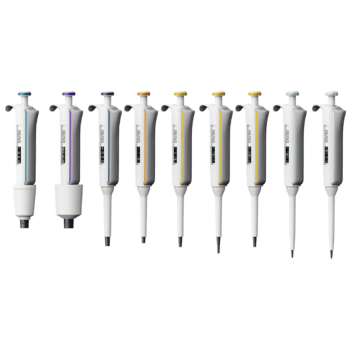
Mi-Pette New Generation Colorful Fully Autoclavable Adjustable Pipette is a high-precision manual pipette designed for accurate and comfortable liquid handling. Featuring an ergonomic design, color-coded identification, fine volume adjustment, and full autoclavability, it is ideal for research, diagnostics, and routine laboratory applications.
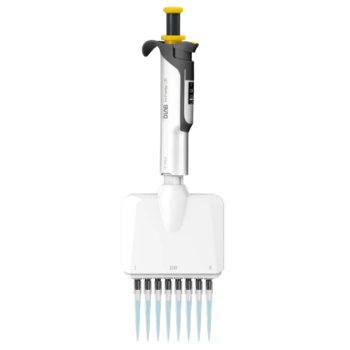
HiPette-LTS Fully Autoclavable Manual 8-Channel Adjustable Colorful Pipette is a high-precision, fully autoclavable multi-channel pipette designed for accurate and efficient liquid handling. Featuring LTS technology for smooth tip loading and consistent performance, it is ideal for molecular biology, cell culture, immunology, and routine laboratory applications.

Cuvettes are small transparent containers used in spectrophotometry to hold liquid samples for absorbance or transmittance measurements. Made of glass, plastic, or quartz, they allow light to pass through the sample. Quartz cuvettes are preferred for UV light analysis. They are essential for accurate optical readings and must be handled carefully to avoid contamination or scratches.
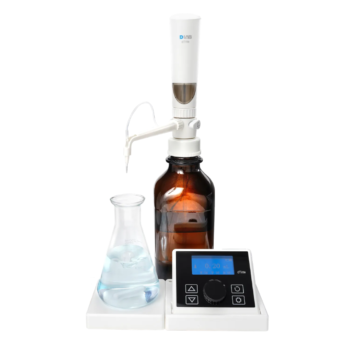
dTrite Electronic Burette is a high-precision electronic titration device designed for accurate and effortless liquid dispensing. Featuring electronic control, a built-in magnetic stirrer, and a large LCD display, it is ideal for laboratory titration and analytical applications.

Made of top quality porcelain. Withstand temperatures up to 1150 C. Round form with lip. Glazed inside.

A pycnometer is a laboratory device used to determine the density or specific gravity of liquids and fine solids. It is usually a small glass flask with a close-fitting stopper that has a capillary hole to allow air to escape. Pycnometers provide highly accurate measurements and are commonly used in chemistry and material science.
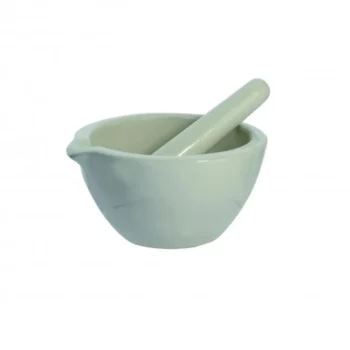
Porcelain mortar with pestle
Made of upper grade porcelain. Unglazed inside but fine polished. Price includes mortar and pestle.

The Le Chatelier Specific Gravity Bottle is a specialized glass apparatus used to determine the specific gravity (relative density) of fine materials like cement. It has a narrow neck with a graduated scale and a bulb at the bottom. The bottle accurately measures the volume displaced by a known weight of material, helping assess quality and consistency in construction materials.

Porcelain crucible is a small, heat-resistant container made from ceramic material, used in laboratories for heating substances to very high temperatures. It is commonly used in ash content analysis, metal melting, and chemical reactions that require intense heat. Crucibles can withstand open flames and are often used with a lid and a clay triangle during heating.


Burette is a long, graduated glass tube with a tap at the bottom, used in laboratories to accurately deliver measured volumes of liquids, especially in titrations. It allows controlled addition of a solution to react with another in a flask. Burettes are marked with precise volume measurements, making them essential for quantitative chemical analysis.

A stand and clamp is a basic yet essential piece of laboratory equipment used to hold and support apparatus during experiments. It provides stability and helps secure glassware or other tools in place.


Reviews
There are no reviews yet.