

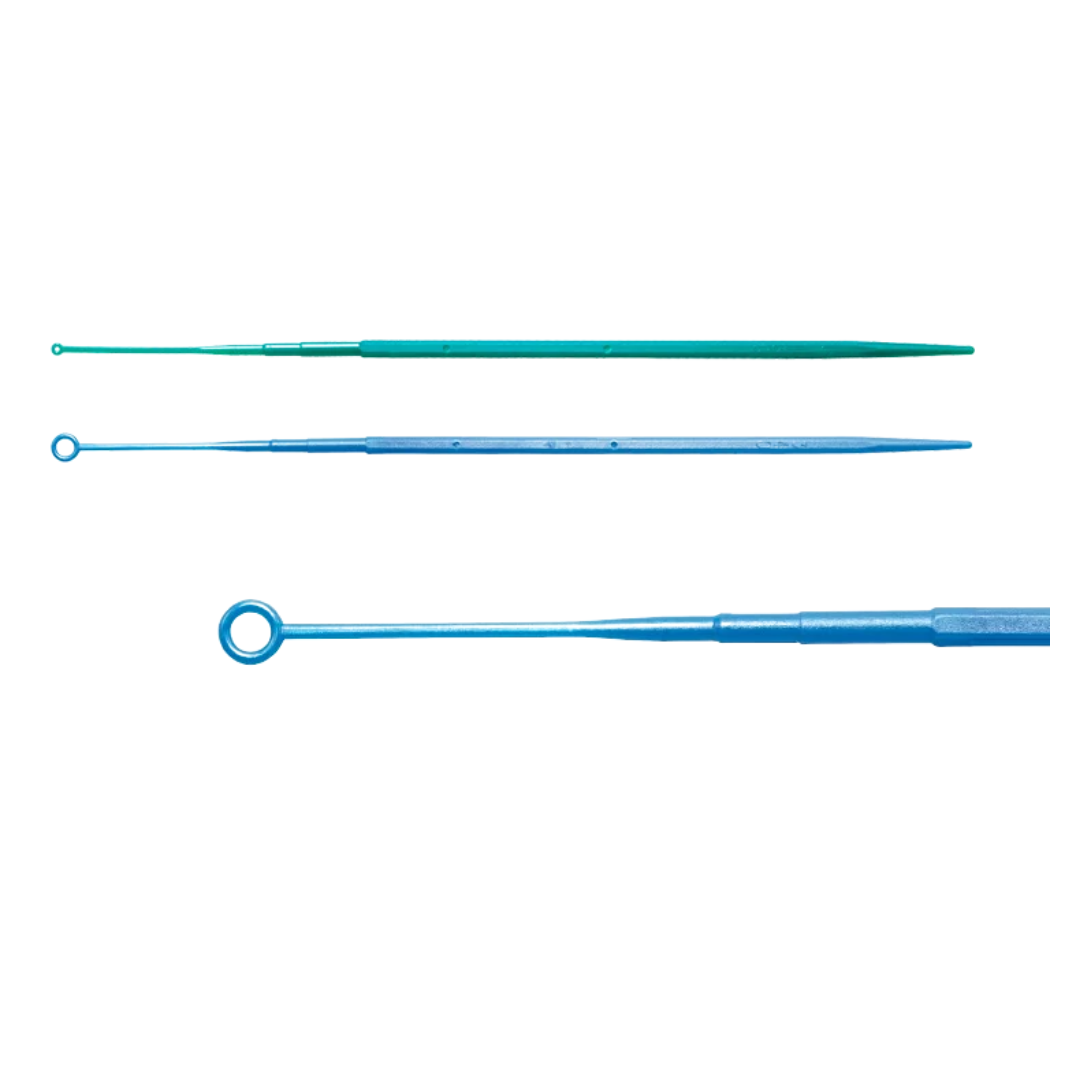
INOCULATING LOOPS

Inoculating loops are simple laboratory tools used to transfer microorganisms from one medium to another, such as from a culture broth to an agar plate. Made of metal (usually nichrome or platinum) or plastic, they have a small loop at the end that holds a tiny amount of liquid or cells. They are essential in microbiology for aseptic techniques.
Related Products
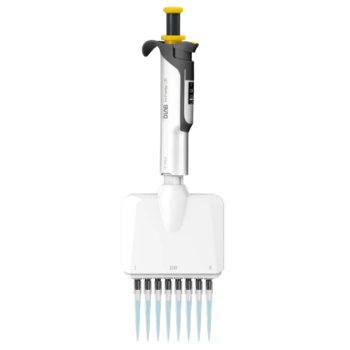
HiPette-LTS Fully Autoclavable Manual 8-Channel Adjustable Colorful Pipette is a high-precision, fully autoclavable multi-channel pipette designed for accurate and efficient liquid handling. Featuring LTS technology for smooth tip loading and consistent performance, it is ideal for molecular biology, cell culture, immunology, and routine laboratory applications.

A hydrometer is an instrument used to measure the specific gravity (relative density) of liquids. It consists of a sealed glass tube with a weighted bottom, allowing it to float upright. The level to which it sinks indicates the liquid’s density. Hydrometers are commonly used in brewing, winemaking, and battery testing.

Burette is a long, graduated glass tube with a tap at the bottom, used in laboratories to accurately deliver measured volumes of liquids, especially in titrations. It allows controlled addition of a solution to react with another in a flask. Burettes are marked with precise volume measurements, making them essential for quantitative chemical analysis.
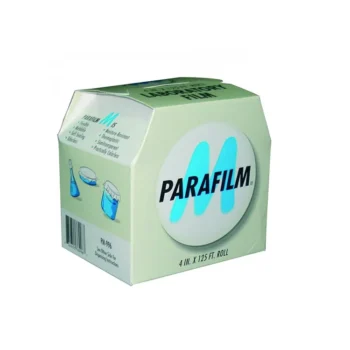
film made of polyolefines and paraffin waxes Service temperature from 45 ?C up to +50C (melting point +60 C) Resistant to saline solutions, most common inorganic acids and bases used in laboratory and some organics solvents (methanol, ethanol and 2-propanol) Not resistant to diethylether, chloroform, carbon tetrachloride, benzene or toluene.


Petri dishes are shallow, circular, flat-lidded dishes typically made of glass or plastic, used in laboratories for culturing microorganisms like bacteria and fungi. Filled with a nutrient medium (e.g., agar), they provide a controlled environment for microbial growth. Petri dishes are essential tools in microbiology, cell culture, and research involving observation of microbial colonies and growth patterns.

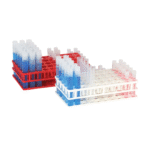
Racks are laboratory tools used to hold, organize, and store test tubes safely and upright. They are made of plastic, wood, or metal and come in various sizes to fit different tube diameters. These racks help prevent spillage, breakage, and contamination during experiments, making them essential for safe and efficient laboratory work.

Reagent bottles, also known as chemical bottles or laboratory bottles, are specialized containers used to store chemicals, reagents, and other laboratory substances. They are designed to ensure safe handling, accurate identification, and proper storage of a wide variety of chemical compounds.

A vacuum distillation glass set is a laboratory apparatus used to distill liquids at reduced pressure, allowing substances with high boiling points to vaporize at lower temperatures. This prevents thermal decomposition and is ideal for heat-sensitive compounds.

Cuvettes are small transparent containers used in spectrophotometry to hold liquid samples for absorbance or transmittance measurements. Made of glass, plastic, or quartz, they allow light to pass through the sample. Quartz cuvettes are preferred for UV light analysis. They are essential for accurate optical readings and must be handled carefully to avoid contamination or scratches.

A pycnometer is a laboratory device used to determine the density or specific gravity of liquids and fine solids. It is usually a small glass flask with a close-fitting stopper that has a capillary hole to allow air to escape. Pycnometers provide highly accurate measurements and are commonly used in chemistry and material science.

Centrifuge tube is a cylindrical, conical-bottomed container used in laboratories to hold samples during centrifugation. Made of plastic or glass, it is designed to withstand high-speed spinning that separates components based on density. Centrifuge tubes come in various sizes (e.g., 1.5 mL, 15 mL, 50 mL) and often have screw caps or snap lids to prevent leakage during use.


Reviews
There are no reviews yet.