
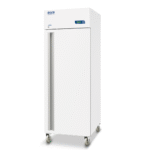

LABORATORY FREEZER

A laboratory freezer is a specialized unit used to store biological samples, chemicals, reagents, and vaccines at low temperatures, typically ranging from –20°C to –80°C. It ensures sample stability and prevents degradation. Laboratory freezers are essential in research, clinical, and pharmaceutical settings for long-term preservation and safety.
Related Products

A laboratory oven is used for drying, sterilizing, and heating samples at controlled temperatures, typically ranging from 50°C to 300°C. It operates using convection to ensure uniform heat distribution. Common applications include removing moisture, curing materials, and conducting thermal testing in biological, chemical, and industrial labs.

An Ice Flake Machine is a device used to produce soft, dry flakes of ice, commonly used in laboratories, hospitals, food industries, and fisheries. The flake ice is ideal for sample preservation, temperature control, and cooling sensitive materials. These machines operate efficiently, providing continuous ice supply and are valued for their quick freezing, low maintenance, and energy efficiency.

An incubator is a laboratory device used to maintain a controlled environment with specific temperature, humidity, and sometimes CO₂ levels. It is essential for the growth of microorganisms, cell cultures, and eggs in biological and medical research. Incubators ensure stable conditions for experiments requiring consistent incubation over a set period.

A milk analyzer is a device used to quickly test the quality and composition of milk. It measures key parameters such as fat content, SNF (solids-not-fat), density, added water, protein, and lactose. Widely used in dairies, milk collection centers, and labs, it ensures fair pricing and quality control. Results are fast, accurate, and essential for dairy operations.

GC-MS (Gas Chromatography–Mass Spectrometry) is an analytical technique used to separate and identify chemical substances in a sample. It combines Gas Chromatography (GC) for separating components based on volatility and Mass Spectrometry (MS) for identifying them based on their mass-to-charge ratio. GC-MS is widely used in forensics, environmental testing, drug detection, food analysis, and research due to its high sensitivity and accuracy in detecting trace-level compounds.

A laboratory chiller is a cooling device used to maintain a constant low temperature for laboratory instruments or processes. It works by circulating chilled fluid (like water or glycol) through equipment such as rotary evaporators, condensers, lasers, or reactors to dissipate heat.

A fat analyzer is a laboratory instrument used to determine the fat content in food and feed samples. It typically operates using solvent extraction methods like Soxhlet or automated systems. The analyzer extracts fat from the sample, then measures and calculates the percentage of fat present. It’s essential in quality control, nutrition labeling, and food research.

A Flash Point Tester is an instrument used to determine the flash point of a liquid—the lowest temperature at which it emits enough vapor to ignite in air when exposed to an ignition source. This property is critical for assessing the flammability and fire hazard of fuels, solvents, oils, and other chemicals.

A colorimeter is a device used to measure the concentration of colored compounds in a solution by detecting the amount of light absorbed. It works on Beer-Lambert’s law and is widely used in chemistry, biology, and environmental labs. Colorimeters help in water testing, food analysis, and clinical diagnostics for quick, accurate color-based measurements.

A water distiller is a device used to purify water by boiling it into steam and then condensing the steam back into liquid. This process removes impurities such as salts, heavy metals, microorganisms, and most chemicals. Distilled water is often used in laboratories, medical settings, and for appliances like steam irons where mineral-free water is required. Although effective, distillation is slower and more energy-intensive compared to other filtration methods.
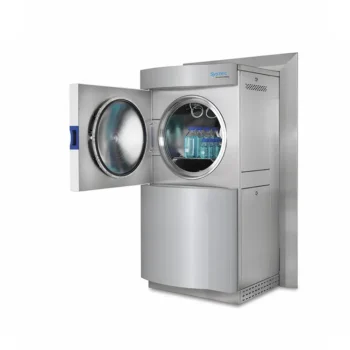
Standing autoclaves of the performance category HX can be used for all laboratory applications, even for sophisticated sterilization processes and are available in 16 different sizes with 65 to 1580 liters chamber volume. The new, improved generation of Systec H-Series autoclaves comes in a new design, with a fully revamped interior and a completely new touchscreen control. The combination of new features guarantees higher work precision, easier maintenance of devices, shorter and more efficient process times.
All Systec autoclaves can be upgraded on a modular basis, with options and equipment to optimize sterilization processes for performing validatable sterilization procedures.
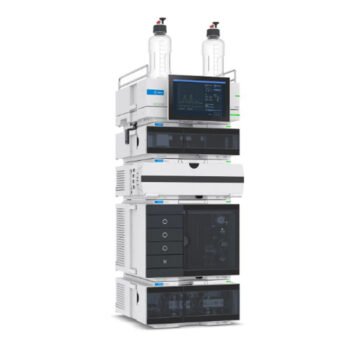
Agilent HPLC (High-Performance Liquid Chromatography) systems are advanced analytical instruments used for separating, identifying, and quantifying compounds in a mixture. Manufactured by Agilent Technologies, these systems are widely used in pharmaceuticals, environmental testing, food safety, and chemical research. Agilent HPLCs are known for their high precision, reliability, and user-friendly software (such as OpenLab or ChemStation). Common models include the Agilent 1100, 1200, and 1260 Infinity series.


Reviews
There are no reviews yet.