
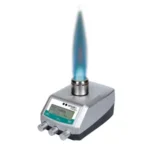

BUNSEN BURNER

Safety Bunsen Burner with flame monitor and overheating protection.
Related Products

A laboratory chiller is a cooling device used to maintain a constant low temperature for laboratory instruments or processes. It works by circulating chilled fluid (like water or glycol) through equipment such as rotary evaporators, condensers, lasers, or reactors to dissipate heat.

A UV-Vis Spectrophotometer is an analytical instrument used to measure the absorbance or transmittance of a sample in the ultraviolet (UV) and visible (Vis) light spectrum (typically 190–800 nm). It is widely used to determine the concentration of substances in solution based on Beer-Lambert’s Law.

A fat analyzer is a laboratory instrument used to determine the fat content in food and feed samples. It typically operates using solvent extraction methods like Soxhlet or automated systems. The analyzer extracts fat from the sample, then measures and calculates the percentage of fat present. It’s essential in quality control, nutrition labeling, and food research.

An incubator is a laboratory device used to maintain a controlled environment with specific temperature, humidity, and sometimes CO₂ levels. It is essential for the growth of microorganisms, cell cultures, and eggs in biological and medical research. Incubators ensure stable conditions for experiments requiring consistent incubation over a set period.

A corrosion tester is a device or system used to evaluate the resistance of materials—especially metals and coatings—to corrosion under specific environmental conditions. These tests simulate harsh conditions such as salt spray (fog), humidity, temperature changes, or chemical exposure to predict how materials will perform over time.

A COD digestion unit is a laboratory device used to measure the Chemical Oxygen Demand (COD) of water or wastewater. It heats samples with a strong oxidizing agent (usually potassium dichromate in sulfuric acid) at 150°C for two hours. This process oxidizes organic matter, indicating pollution levels. It’s essential for water quality analysis in environmental monitoring.

A magnetic stirrer hot plate is a common laboratory device used to heat and stir liquids simultaneously. It consists of a flat heating surface and a rotating magnetic field that spins a magnetic stir bar placed inside the liquid.
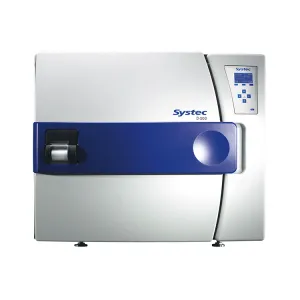
Front-loading, bench-top autoclaves available in 7 sizes with chamber capacities ranging from 23 to 200 l. Compact on the outside but with ideal chamber capacities inside. Each size has an optimal loading capacity for most standard media bottles and Erlenmeyer flasks.

A rotary evaporator (or rotavap) is a laboratory device used to remove solvents from samples through evaporation under reduced pressure. It works by rotating a flask containing the solution, while gently heating it and applying a vacuum, allowing the solvent to evaporate at a lower temperature. It is widely used in chemistry, pharmaceuticals, and food research for concentration, purification, and solvent recovery.
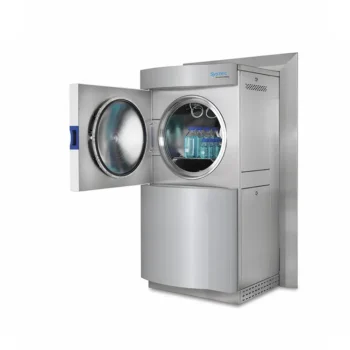
Standing autoclaves of the performance category HX can be used for all laboratory applications, even for sophisticated sterilization processes and are available in 16 different sizes with 65 to 1580 liters chamber volume. The new, improved generation of Systec H-Series autoclaves comes in a new design, with a fully revamped interior and a completely new touchscreen control. The combination of new features guarantees higher work precision, easier maintenance of devices, shorter and more efficient process times.
All Systec autoclaves can be upgraded on a modular basis, with options and equipment to optimize sterilization processes for performing validatable sterilization procedures.
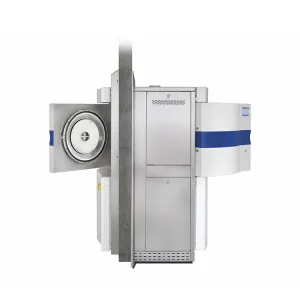
Double-door/pass-through autoclaves of the performance category HX can be used for all laboratory applications, even for sophisticated sterilization processes and are available in 13 different sizes with 90 to 1580 liters chamber volume. The combination of new features guarantees higher work precision, easier maintenance of devices, shorter and more efficient process times. All additional optional accessories can be fitted to obtain validatable processes. For use under the most stringent clean room and safety conditions: For biological safety laboratories, e.g. fitting as a sterilization and pass-through lock for protecting the external environment, for clean rooms in laboratories and production facilities as a sterilization and pass-through lock separating sterile and non-sterile areas.

An HPLC column (High-Performance Liquid Chromatography column) is a crucial component of an HPLC system used to separate, identify, and quantify components in a liquid sample.


Reviews
There are no reviews yet.