


Cylindrical Bar Magnets
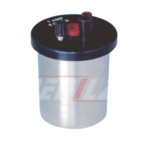
Cylindrical Bar Magnets are laboratory magnets used for demonstrating magnetic fields, magnetic forces, attraction, repulsion, and magnetic induction. They are supplied in pairs with keepers for safe storage and protection of magnetic strength.
Cylindrical Bar Magnets are designed for physics laboratory experiments and demonstrations involving magnetism and magnetic fields. Made from durable chrome steel, the magnets are supplied as a pair in red and blue, with a diameter of 12 mm.
The magnets produce a strong magnetic field at their poles and can be used to demonstrate magnetic attraction and repulsion, magnetic field patterns, magnetic induction, and other fundamental principles of magnetism. Each pair is supplied with keepers to help preserve the magnetic strength during storage.
They are suitable for school, college, and educational physics laboratories.
Related Products
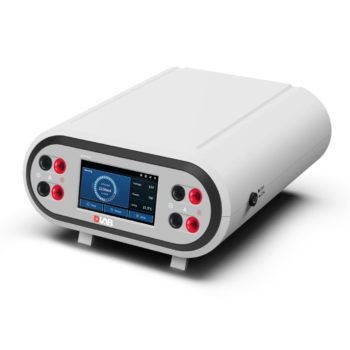
A high-performance electrophoresis power supply designed for DNA/RNA electrophoresis, SDS-PAGE, Native-PAGE, and protein transfer applications. Features touchscreen control, precise output adjustment, and reliable safety functions for laboratory use.

An electronic micropipette is a digitally controlled liquid handling device used to accurately and precisely aspirate and dispense small volumes of liquids in laboratories. Unlike manual pipettes, it uses a motorized piston and electronic control to reduce hand strain and improve reproducibility.
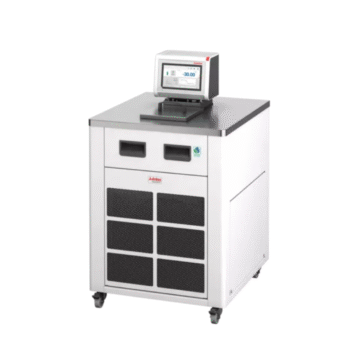
A refrigerated/heating circulator is a laboratory device used to precisely control the temperature of samples or equipment by circulating fluid. It can both heat and cool, typically ranging from -20°C to 150°C. Commonly used in chemical reactions, viscometers, and spectroscopy, it ensures stable and uniform thermal conditions.
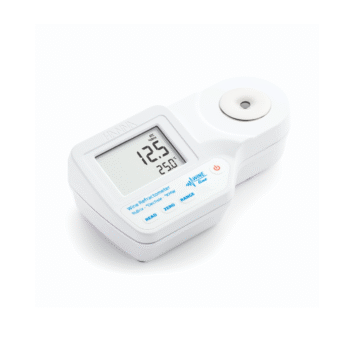
A refractometer is an instrument used to measure the refractive index of a substance, typically to determine concentration levels, such as sugar in liquids (Brix scale). Commonly used in food, beverage, and chemical industries, it provides quick and accurate results. It works by analyzing how light bends through the sample.

A pipette filler is a laboratory tool used to safely and accurately draw liquids into glass or plastic pipettes without using mouth suction. It provides better control and prevents contamination or exposure to hazardous substances.
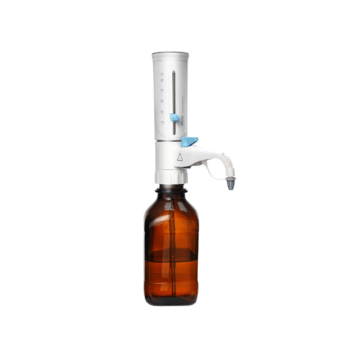
A bottle-top dispenser is a laboratory device mounted on reagent bottles to safely and accurately dispense specific volumes of liquid chemicals directly from the container. It is widely used to avoid spillage and reduce contamination during repetitive liquid handling.

A microscope is a laboratory instrument used to magnify and observe small objects or details that are invisible to the naked eye. It is essential in biology, medicine, and materials science for examining cells, microorganisms, tissues, and structures.


An orbital shaker is a laboratory device used to gently mix or agitate liquids in flasks, tubes, or beakers. It moves in a circular (orbital) motion, making it ideal for cell cultures, solubility studies, or general mixing. Commonly used in biology, chemistry, and pharmaceutical labs, it ensures uniform mixing without foaming.

An ultrasonic cleaner is a device that uses high-frequency sound waves (usually 20–40 kHz) in a liquid solution to clean objects thoroughly and efficiently. It removes dirt, grease, contaminants, and residues from items without damaging delicate surfaces.
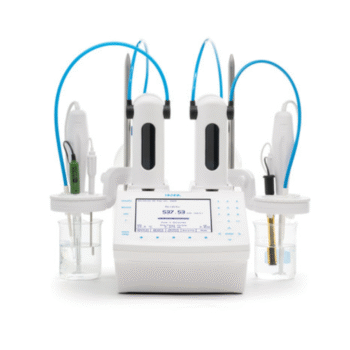
A potentiometric titrator is an analytical instrument used to determine the concentration of a substance in solution by measuring the voltage change during a titration. It uses electrodes to detect the endpoint precisely without relying on color changes, making it ideal for colored or turbid samples in chemical and pharmaceutical analysis.


Reviews
There are no reviews yet.