
PORCELIN MORTER AND PESTLE

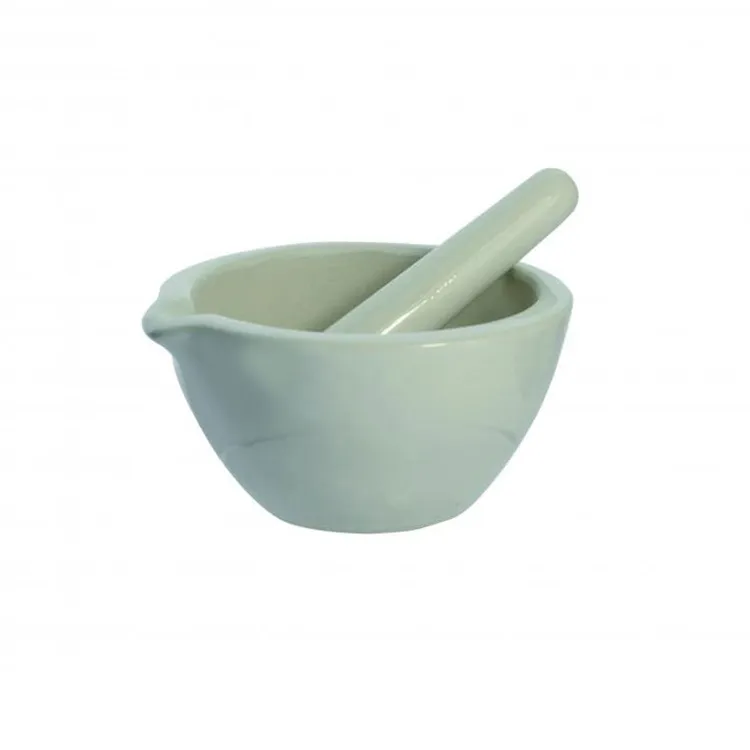
Porcelain mortar with pestle
Made of upper grade porcelain. Unglazed inside but fine polished. Price includes mortar and pestle.
Related Products

PCR tubes are small, thin-walled plastic tubes used in Polymerase Chain Reaction (PCR) to hold DNA samples during thermal cycling. Made of polypropylene, they ensure efficient heat transfer and chemical resistance. They typically come in 0.2 mL or 0.5 mL sizes, with flat or domed caps. PCR tubes are essential for precise and contamination-free DNA amplification.

Pipette tips are disposable, narrow plastic attachments used with micropipettes to accurately transfer small volumes of liquid in laboratories. They ensure precision, prevent cross-contamination, and are available in various sizes (e.g., 10 µL, 200 µL, 1000 µL). Sterile pipette tips are used in sensitive experiments like molecular biology, cell culture, and PCR.

Beaker is a common laboratory container used for mixing, stirring, and heating chemicals. It is usually made of glass or plastic and has a cylindrical shape with a flat bottom and a small spout for easy pouring. Beakers come in various sizes and have volume markings, but they are not used for precise measurements.

A vacuum distillation glass set is a laboratory apparatus used to distill liquids at reduced pressure, allowing substances with high boiling points to vaporize at lower temperatures. This prevents thermal decomposition and is ideal for heat-sensitive compounds.

Boiling flasks are used for heating and boiling of liquids. The flasks are designed to have round bodies with long, thin necks to facilitate uniform heat distribution and minimize evaporation. Boiling flasks are typically made of borosilicate glass, which is resistant to thermal shock and chemicals. Some boiling flasks have rounded or conical bottoms and need support to stand upright, while others have flat bottoms and can stand alone.
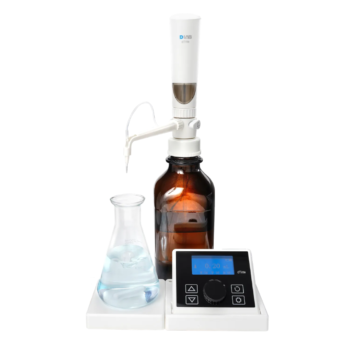
dTrite Electronic Burette is a high-precision electronic titration device designed for accurate and effortless liquid dispensing. Featuring electronic control, a built-in magnetic stirrer, and a large LCD display, it is ideal for laboratory titration and analytical applications.

Made of top quality porcelain. Withstand temperatures up to 1150 C. Round form with lip. Glazed inside.
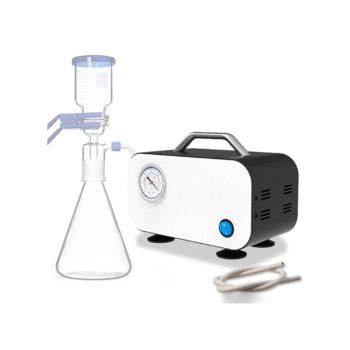
A vacuum pump with filtration is a system used primarily in laboratories to remove air and create a vacuum for filtration processes. It helps in speeding up filtration by reducing pressure, allowing liquid to pass quickly through a filter paper.
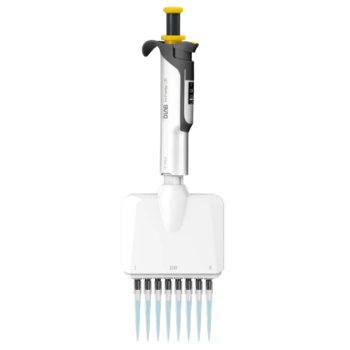
HiPette-LTS Fully Autoclavable Manual 8-Channel Adjustable Colorful Pipette is a high-precision, fully autoclavable multi-channel pipette designed for accurate and efficient liquid handling. Featuring LTS technology for smooth tip loading and consistent performance, it is ideal for molecular biology, cell culture, immunology, and routine laboratory applications.

The Le Chatelier Specific Gravity Bottle is a specialized glass apparatus used to determine the specific gravity (relative density) of fine materials like cement. It has a narrow neck with a graduated scale and a bulb at the bottom. The bottle accurately measures the volume displaced by a known weight of material, helping assess quality and consistency in construction materials.

A pycnometer is a laboratory device used to determine the density or specific gravity of liquids and fine solids. It is usually a small glass flask with a close-fitting stopper that has a capillary hole to allow air to escape. Pycnometers provide highly accurate measurements and are commonly used in chemistry and material science.
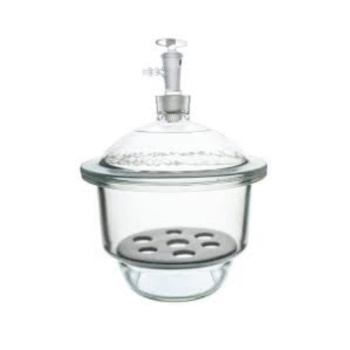
A desiccator is a sealed container used in laboratories to keep moisture-sensitive items dry. It contains a desiccant, such as silica gel, which absorbs humidity. Desiccators are commonly used to store samples, dry chemicals, or protect equipment from moisture, ensuring accurate experimental results and preserving sample integrity.


Reviews
There are no reviews yet.