

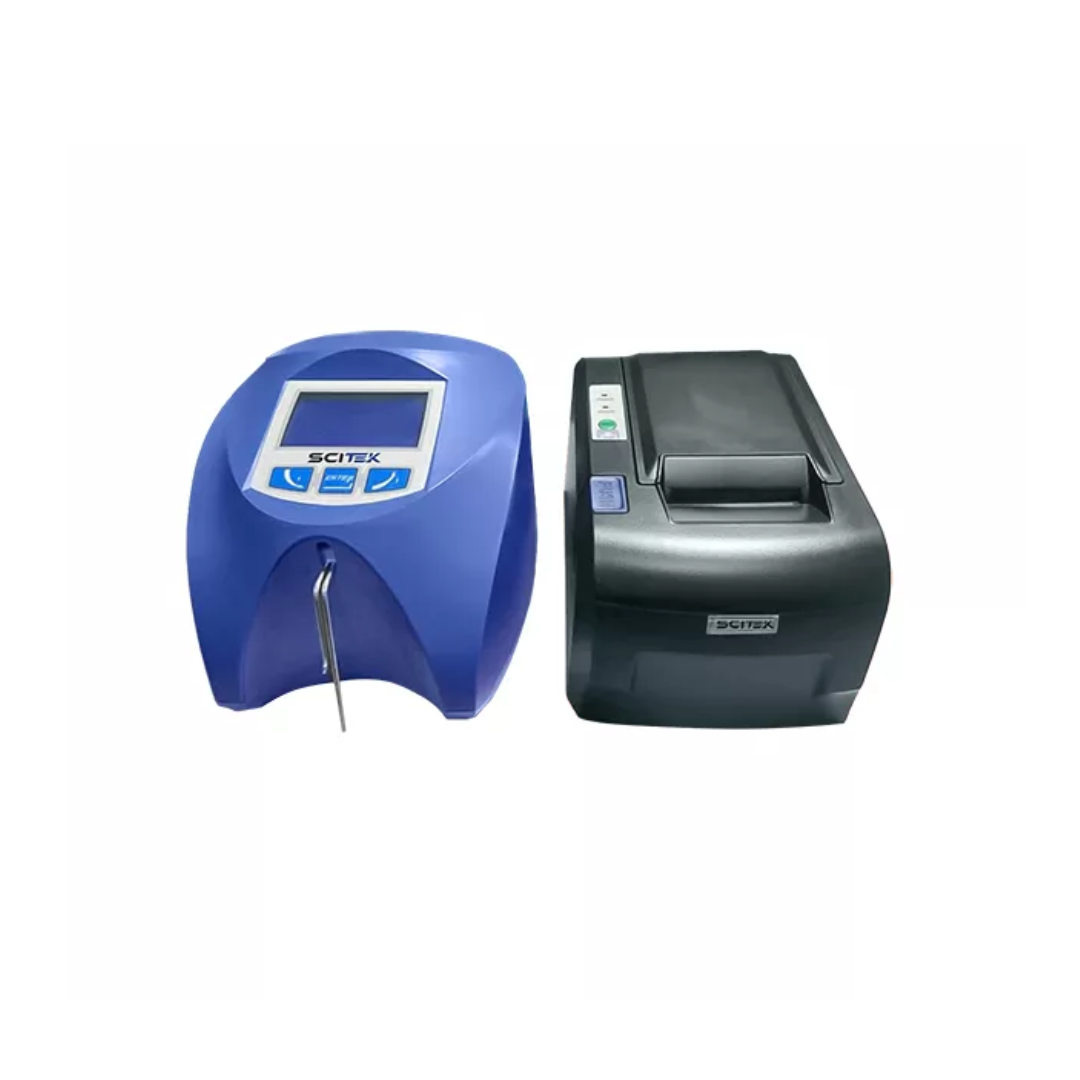
MILK ANALYZER


A milk analyzer is a device used to quickly test the quality and composition of milk. It measures key parameters such as fat content, SNF (solids-not-fat), density, added water, protein, and lactose. Widely used in dairies, milk collection centers, and labs, it ensures fair pricing and quality control. Results are fast, accurate, and essential for dairy operations.
Related Products

FTIR (Fourier Transform Infrared Spectroscopy) is an analytical technique used to identify organic, polymeric, and some inorganic materials. It works by measuring how a sample absorbs infrared (IR) light at different wavelengths. The resulting spectrum represents the molecular fingerprint of the material, showing characteristic peaks corresponding to specific chemical bonds.

A UV-Vis Spectrophotometer is an analytical instrument used to measure the absorbance or transmittance of a sample in the ultraviolet (UV) and visible (Vis) light spectrum (typically 190–800 nm). It is widely used to determine the concentration of substances in solution based on Beer-Lambert’s Law.

A laboratory freezer is a specialized unit used to store biological samples, chemicals, reagents, and vaccines at low temperatures, typically ranging from –20°C to –80°C. It ensures sample stability and prevents degradation. Laboratory freezers are essential in research, clinical, and pharmaceutical settings for long-term preservation and safety.

A Thermal Gravimetric Instrument (TGA) measures changes in a material’s weight as it is heated, cooled, or held at a constant temperature. It helps determine thermal stability, composition, and decomposition temperatures. TGA is widely used in material science, polymers, and pharmaceuticals for quality control and research applications.

A water distiller is a device used to purify water by boiling it into steam and then condensing the steam back into liquid. This process removes impurities such as salts, heavy metals, microorganisms, and most chemicals. Distilled water is often used in laboratories, medical settings, and for appliances like steam irons where mineral-free water is required. Although effective, distillation is slower and more energy-intensive compared to other filtration methods.

A fiber analyzer is a laboratory instrument used to determine the fiber content in food, feed, or plant materials. It measures components like crude fiber, neutral detergent fiber (NDF), and acid detergent fiber (ADF). The analyzer automates digestion, rinsing, and filtration processes, ensuring accurate and efficient analysis of dietary fiber for nutritional and agricultural studies.

Vertical autoclaves ,Ideal for Biotechnology, Clinical, Environmental, Medical and Food Industry.Innovative Easy-to-Use Digital Fuzzy Controller.
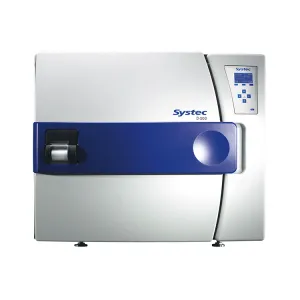
Front-loading, bench-top autoclaves available in 7 sizes with chamber capacities ranging from 23 to 200 l. Compact on the outside but with ideal chamber capacities inside. Each size has an optimal loading capacity for most standard media bottles and Erlenmeyer flasks.
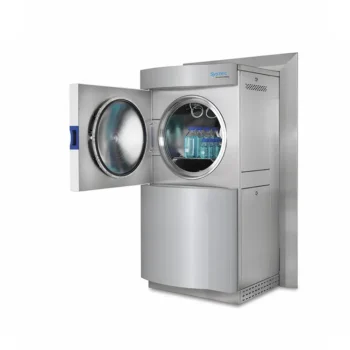
Standing autoclaves of the performance category HX can be used for all laboratory applications, even for sophisticated sterilization processes and are available in 16 different sizes with 65 to 1580 liters chamber volume. The new, improved generation of Systec H-Series autoclaves comes in a new design, with a fully revamped interior and a completely new touchscreen control. The combination of new features guarantees higher work precision, easier maintenance of devices, shorter and more efficient process times.
All Systec autoclaves can be upgraded on a modular basis, with options and equipment to optimize sterilization processes for performing validatable sterilization procedures.

Hydrotherm boilers are high-efficiency heating systems used in residential and commercial buildings. They operate using hot water or steam and are typically gas-fired. Known for their durability and modular design, Hydrotherm boilers offer reliable and energy-efficient performance. Regular maintenance ensures long service life and optimal heating efficiency.

A COD digestion unit is a laboratory device used to measure the Chemical Oxygen Demand (COD) of water or wastewater. It heats samples with a strong oxidizing agent (usually potassium dichromate in sulfuric acid) at 150°C for two hours. This process oxidizes organic matter, indicating pollution levels. It’s essential for water quality analysis in environmental monitoring.
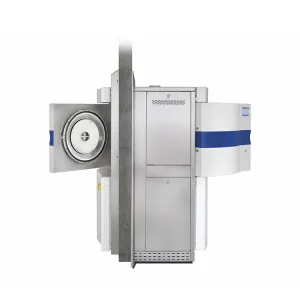
Double-door/pass-through autoclaves of the performance category HX can be used for all laboratory applications, even for sophisticated sterilization processes and are available in 13 different sizes with 90 to 1580 liters chamber volume. The combination of new features guarantees higher work precision, easier maintenance of devices, shorter and more efficient process times. All additional optional accessories can be fitted to obtain validatable processes. For use under the most stringent clean room and safety conditions: For biological safety laboratories, e.g. fitting as a sterilization and pass-through lock for protecting the external environment, for clean rooms in laboratories and production facilities as a sterilization and pass-through lock separating sterile and non-sterile areas.


Reviews
There are no reviews yet.