LABORATORY CHILLER CIRCULATOR
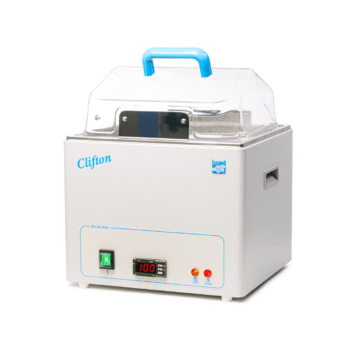
A laboratory chiller is a cooling device used to maintain a constant low temperature for laboratory instruments or processes. It works by circulating chilled fluid (like water or glycol) through equipment such as rotary evaporators, condensers, lasers, or reactors to dissipate heat.
- Size Guide
Size Guide
DRESSEST-SHIRTBOTTOMSDRESSESSize Chest Waist Hips XS 34 28 34 S 36 30 36 M 38 32 38 L 40 34 40 XL 42 36 42 2XL 44 38 44 All measurements are in INCHES
and may vary a half inch in either direction.
T-SHIRTSize Chest Waist Hips 2XS 32 26 32 XS 34 28 34 S 36 30 36 M 38 32 38 L 40 34 40 XL 42 36 42 All measurements are in INCHES
and may vary a half inch in either direction.
BOTTOMSSize Chest Waist Hips XS 34 28 34 S 36 30 36 M 38 32 38 L 40 34 40 XL 42 36 42 2XL 44 38 44 All measurements are in INCHES
and may vary a half inch in either direction.
- Delivery & Return
Delivery
Store delivery FREE
1-3 working days
Home or collection point from £35.00 FREE
On all your orders for home or collection point delivery
Returns
Return
We will accept exchanges and returns of unworn and unwashed garments within 30 days of the date of purchase (14 days during the sales period).
Returns in store FREE
Your return will usually be processed within a week to a week and a half. We’ll send you a Return Notification email to notify you once the return has been completed. Please allow 1-3 business days for refunds to be received to the original form of payment once the return has been processed.
- Ask a Question
| 5 |
|
0 |
| 4 |
|
0 |
| 3 |
|
0 |
| 2 |
|
0 |
| 1 |
|
0 |
Related Products
An HPLC column (High-Performance Liquid Chromatography column) is a crucial component of an HPLC system used to separate, identify, and quantify components in a liquid sample.
GC-MS (Gas Chromatography–Mass Spectrometry) is an analytical technique used to separate and identify chemical substances in a sample. It combines Gas Chromatography (GC) for separating components based on volatility and Mass Spectrometry (MS) for identifying them based on their mass-to-charge ratio. GC-MS is widely used in forensics, environmental testing, drug detection, food analysis, and research due to its high sensitivity and accuracy in detecting trace-level compounds.
An oil distillation kit is a laboratory setup used to extract and purify essential oils or separate oil mixtures based on their boiling points through the process of distillation.
Double-door/pass-through autoclaves of the performance category HX can be used for all laboratory applications, even for sophisticated sterilization processes and are available in 13 different sizes with 90 to 1580 liters chamber volume. The combination of new features guarantees higher work precision, easier maintenance of devices, shorter and more efficient process times. All additional optional accessories can be fitted to obtain validatable processes. For use under the most stringent clean room and safety conditions: For biological safety laboratories, e.g. fitting as a sterilization and pass-through lock for protecting the external environment, for clean rooms in laboratories and production facilities as a sterilization and pass-through lock separating sterile and non-sterile areas.
A milk analyzer is a device used to quickly test the quality and composition of milk. It measures key parameters such as fat content, SNF (solids-not-fat), density, added water, protein, and lactose. Widely used in dairies, milk collection centers, and labs, it ensures fair pricing and quality control. Results are fast, accurate, and essential for dairy operations.
A colorimeter is a device used to measure the concentration of colored compounds in a solution by detecting the amount of light absorbed. It works on Beer-Lambert’s law and is widely used in chemistry, biology, and environmental labs. Colorimeters help in water testing, food analysis, and clinical diagnostics for quick, accurate color-based measurements.
Standing autoclaves of the performance category HX can be used for all laboratory applications, even for sophisticated sterilization processes and are available in 16 different sizes with 65 to 1580 liters chamber volume. The new, improved generation of Systec H-Series autoclaves comes in a new design, with a fully revamped interior and a completely new touchscreen control. The combination of new features guarantees higher work precision, easier maintenance of devices, shorter and more efficient process times.
All Systec autoclaves can be upgraded on a modular basis, with options and equipment to optimize sterilization processes for performing validatable sterilization procedures.
The Kjeldahl apparatus is used to determine the nitrogen content in organic compounds, which helps estimate protein levels in food, feed, and other samples. The process involves digestion, distillation, and titration. In digestion, nitrogen is converted to ammonium sulfate; during distillation, ammonia is released and captured; titration quantifies nitrogen. It’s widely used in agriculture, food, and environmental labs.
Vertical autoclaves ,Ideal for Biotechnology, Clinical, Environmental, Medical and Food Industry.Innovative Easy-to-Use Digital Fuzzy Controller.
A UV-Vis Spectrophotometer is an analytical instrument used to measure the absorbance or transmittance of a sample in the ultraviolet (UV) and visible (Vis) light spectrum (typically 190–800 nm). It is widely used to determine the concentration of substances in solution based on Beer-Lambert’s Law.
A water distiller is a device used to purify water by boiling it into steam and then condensing the steam back into liquid. This process removes impurities such as salts, heavy metals, microorganisms, and most chemicals. Distilled water is often used in laboratories, medical settings, and for appliances like steam irons where mineral-free water is required. Although effective, distillation is slower and more energy-intensive compared to other filtration methods.
FTIR (Fourier Transform Infrared Spectroscopy) is an analytical technique used to identify organic, polymeric, and some inorganic materials. It works by measuring how a sample absorbs infrared (IR) light at different wavelengths. The resulting spectrum represents the molecular fingerprint of the material, showing characteristic peaks corresponding to specific chemical bonds.


Reviews
There are no reviews yet.